
Highlighting Our Membership
The Jean Piaget Society has a diverse international membership, who study a multitude of topics in developmental science. What began as a society exploring Piaget’s theory of knowledge and development has evolved to an exploration of many topics in developmental science. Our members include researchers, practitioners, and those who want to understand the relation between developmental science and policy. We have amazing members, and we feel it is important to celebrate them!
2026 | January
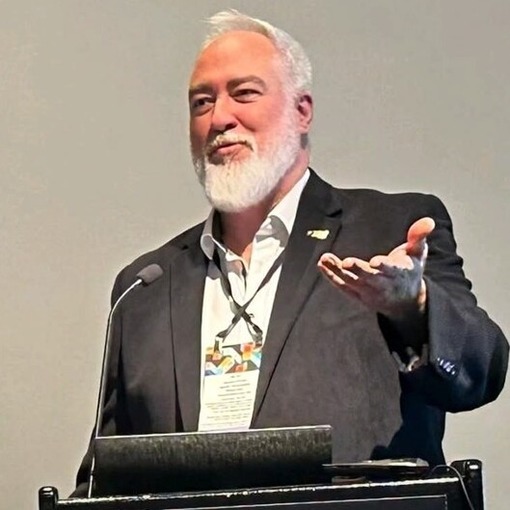
Jeremy Trevelyan Burman
Tenured senior assistant professor of theory and history of psychology; University of Groningen, Netherlands
Who am I?
When you were little, what did you want to be when you grew up? Share any experiences that illustrate your emerging aspirations, passion, curiosity – and changes along the way.
When I was little, I didn’t know what a psychologist was; certainly not what an historian of psychology was. Instead, I wanted to be a marine biologist.
My parents used to rent a summer house on the beach in Nag’s Head on Cape Hatteras. And I’d spend all day playing in and around the ocean: bodysurfing in the waves, snorkeling, digging up sand-critters with my sister, fishing off the pier, flying kites, and playing with the neighbour-kids who thought we sounded funny (we’re Canadian) but still let us join their fun in the sun. I have lots of good memories.
That house is gone now. It was swallowed by the Atlantic. It’s such a shame: it was an amazing, magical place. I would have liked to return with my nephews. It was so easy to explore there, in the sun and the surf.
How do you characterize the understanding and processes of development? What does it mean to you to be involved with development, its research, science, practice, education…?
From the perspective of that first love of biology, and getting a bit technical, “development” is change that occurs within a generation; within the individual lifespan. So it’s a higher-plasticity process than evolution (change that occurs across generations). But it’s also slower than the next level up in the plasticity hierarchy: behavioural change and learning are much, much faster.
From this perspective, development is what happens to a body after behaviour and learning have had their impact on the self and the situation (the Baldwin Effect and niche construction). From this perspective, too, development isn’t just a process. It also provides a physiological record of what couldn’t be accommodated behaviorally, learned, or anticipated by inherited evolutionary processes.
So development isn’t about following a preset program to arrive at a correct solution known in advance; that’s maturation. Development requires confronting and engaging with the unknown and then changing to meet its challenges. Theorizing development means understanding how we become the kind of person that can respond well in situations previous generations didn’t have to worry about.
That’s a big part of what interests me about Piaget’s work. Most of my historical research focuses on his later theorizing: after his introduction of “genetic epistemology” (where genetic means genesis rather than genes). But he wrote about this both at the end of his life, when he referred to Waddington’s epigenetics in regrounding his biological metatheory, and at the beginning. You can see its origins even in his early studies before he turned to psychology.
When Piaget was moving from biology to philosophy, then began to study child development, he made direct comparisons between children and snails. He explained that it’s easier to see the history of development in a snail’s shell than it is to see it in a child’s thinking: you can’t read kids’ thoughts directly like you can a shell.
I quite like that comparison. I think it also explains Piaget’s experimental games, like the Three Mountains Task or the Conservation Experiments: those aren’t psychiatric interviews of the sort he learned in Zurich during his first postdoc and applied in the intelligence-testing that he did in Paris during his second postdoc. Rather, they’re semi-structured interactions meant to elicit behaviors that you might not otherwise see; to do more than ask questions about how knowledge-claims are justified; to try to uncover their reasons. The logics of these reasons were then theorized in such a way that the elicited responses could be understood to group together into clusters, just like species are groupings of individuals that could be named collectively despite their differences. And these groupings are the basis for the “stages” we read about in textbooks; they’re highly variable, and we see this clearly in Piaget’s early writings, but you can refer to them in various ways that make them seem stable.
This historical connection from the children to the snails is not at all how we think of Piaget today. I think that results in misunderstandings. Knowing more of the history could help to ensure that the inevitable future fights are about the right things.
How does your work engage with ideas from Piaget (and colleagues of his era) as originally articulated or as have evolved over time? What drew you to the work that engages you most?
I started studying Piaget because my favourite psychology professor at the University of Toronto compared him to Thomas Kuhn in a discussion of the development and evolution of scientific thinking. (“How neat that these two massively influential thinkers were working on fundamentally the same thing!”)
He said it was a shame that so few of Piaget’s later works about “genetic epistemology” had been translated. And also that it was a shame that contemporary psychologists didn’t have the language skills to dig back into them and find what we would value today about what science and knowledge are from a scientific perspective. Then he pointed at me and said, “Hey, J: don’t you speak French?” (I do!)
Unfortunately, speaking the language isn’t sufficient. You also have to be able to share what you find with the audience in a way they’ll appreciate.
I’ve done a bunch of standard historical work. And I’m proud of the best bits. But it took me several years to invent methods to show quantitatively of Piaget what historians had spent decades demonstrating qualitatively in their studies of the Americanization of Wundt via Titchener. Now, though, I can offer a general method that will work to show meaning-change whenever an author of lots of books has had their work translated over many years into several other languages. I’m hopeful that that will help catalyze similar projects.
Let’s break this down a bit. Obviously, the choice of what to translate reflects the interests of the receiving audience. (Titchener brought over Wundt’s experimental works, not his völkerpsychologie, and then Watson replied to Titchener in his “behaviorist manifesto” which in turn set up the cognitive revolution to which the affective turn was a response and so on.) But so too do the relative rates of subsequent citation also reflect the interests of those who are doing the citing. So more importantly than the fact of meaning-change having happened in two canonical cases, Wundt and Piaget, I also argued—more generally—that there’s a kind of Matthew Effect (of accumulated advantage) that occurs with contemporary translations of historical texts; a primacy effect that’s disconnected from the original source’s publication.
I called this the Levi Effect: what gets translated first shapes the perception of what gets translated later, even if the later translations are actually about something else. So combine this with genuine scientific interest, by an audience with its own concerns, and you sometimes end up with a systematic, structural skew. A bias of perspective.
(Levi is thought to have been Matthew’s original name, in the Bible, but we aren’t sure because of translations and time. And I thought that the originator of the Matthew Effect, Robert Merton [1910-2003], would appreciate this enough to allow it a different name.)
Everything is understood—in translation—according to the logic of the receiving audience, rather than by the logic of the producing source. And when we know there’s a pressing need at the time of reception that didn’t exist originally, like the Cold War, that difference in context provides a strong influence that sometimes results in a quite different understanding. Invisibly, but “obviously” if you look.
To do research with texts that have had their meanings change over time, in this way, requires a kind of Piagetian leap to understand them. And actually, this is what Kuhn said he learned from Piaget that led him to write The Structure of Scientific Revolutions: in order to understand what someone is thinking, you have to “climb into” their head (as he put it). You can’t interpret what they saw with your reasons; it has to be with their reasons.
Summarize and highlight one or more examples from your work and experience that you are excited to share. Why are you keen for others to learn from your efforts?
Big picture? What Kuhn identified in Piaget’s writing about children underlies pretty much all contemporary History of Science in one way or another: their logic is different from ours, and that difference needs to be understood (typically, historians say “contextualized”) if we are also to understand the perspective of the Other. And that’s such a useful insight. I think it should be part of the basic curriculum for all psychologists: an easy entry-point for more complicated later conversations about inter-cultural competence. And also a good place to start to make more difficult histories possible.
Consider how COVID, and post-COVID, conditions affect the work and community.
I think Covid has made me gentler; less intense. You never know if someone is struggling to hit a deadline because they’ve been sick. Or if they’re caring for someone who’s sick. So I’ve doubled down lately on the Principle of Charity: assume the best, not the worst.
More concretely, because I know this is a real problem at the journals on whose editorial boards I serve: if I think I might not be able to do a peer review, I write back immediately to the editor and say so. Then at least they don’t have to wait for me to figure out if I can take on the additional work.
Please tell us about a hidden talent and/or a non-academic hobby that you enjoy.
After a quarter-century away from the sport, I’ve returned to playing hockey. Even when I fall, I can’t help but keep smiling.
2025 | December
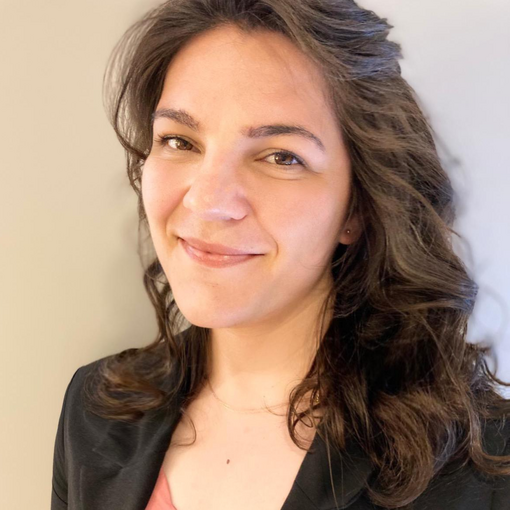
Seçil Gonultas
Bilkent University
Who am I?
When you were little, what did you want to be when you grew up? Share any episodes that illustrate your emerging aspirations, passion, curiosity – and changes along the way.
When I was a child, I often found myself between wanting to be a teacher and a writer. As I grew older, this curiosity shifted and expanded into education and the social sciences. Now, when I think, I feel that what tied all of these together was my deep curiosity about people and why they act the way they do. Then, through my academic journey, my curiosity evolved toward understanding how children and adolescents navigate and develop within social settings. Overall, in many ways, my current career path as an academician brings these past aspirations together, allowing me to teach and mentor students while also writing and sharing knowledge through research.
How does your work engage with ideas from Piaget (or colleagues of his era, or Developmental Science more broadly)? What drew you to the work that engages you most?
My work engages with ideas from Piaget primarily through the lens of moral-cognitive development in children and adolescents. What drew me most to this work is the interplay between cognitive development and social context. I am mainly interested in how children’s understanding of right and wrong, empathy, and group membership evolves not in isolation but through interactions with peers and social norms within a special context.
How do you characterize the understanding and processes of development? What does it mean to you to be involved with development, its research, science, practice, education…?
From my academic perspective, development is best understood as a dynamic and contextually embedded process. In other words, I perceive development situated within context, which is shaped by the interplay of individual cognitive, emotional, and social capacities of children and adolescents.
To me, being involved with developmental science means generating knowledge for children’s and adolescents’ development. My research area in developmental science also allows me to bridge theory and practice, especially in understanding how children and adolescents reason about fairness, empathy, and group dynamics, and then translating those insights into interventions that promote equity and social justice, especially in school settings.
Summarize and highlight one or more examples from your work and experience that you are excited to share. Why are you keen for others to learn from your efforts?
I am especially excited to share my research on adolescents’ bystander responses to bullying in intergroup contexts. This line of research has allowed me to explore how young people reason about fairness, prejudice, and responsibility, and how their judgments shape whether they choose to intervene or remain passive when they witness victimization of their out-group peers. Further, with my research, I examined how social-cognitive skills like theory of mind and empathy can be related to children’s moral development. I am particularly excited for others to learn from these research findings because they highlight the importance of empowering youth to see themselves as active agents of positive change in their schools and communities. In a similar line, I also conducted research promoting civic engagement in social and environmental issues. These research lines also helped me to engage directly with students, schools, educators, and families. I also tried to organize seminars and workshops to share findings with students, teachers, and family. These experiences have also motivated my academic inspirations that developmental science can also foster environments where children and adolescents can thrive.
What do you see as important changes/advances in the work or field that you are involved in?
In the areas of social-cognitive and moral development, one of the most important changes has been the increasing emphasis on context. More recent approaches highlight how children’s and adolescents’ reasoning is shaped by the social settings, including peer groups, schools, families, and broader cultural and digital environments. This pattern motivated me to examine how moral judgments and social-cognitive skills, such as empathy and theory of mind, are expressed differently depending on contexts, including intergroup dynamics. Further, I think that moral development has started to be linked to issues such as prejudice, fairness, and bystander behavior, besides abstract principles.
How did you become involved in the Jean Piaget Society?
I became involved in the Jean Piaget Society very recently while searching for an academic community that brought together developmental scientists with diverse perspectives on children’s and adolescents’ cognitive, social, and moral growth. Being part of JPS allowed me to meet with many colleagues. I feel that JPS is a truly supportive intellectual community. Through exchanges at the conferences, I have been able to share my research on intergroup processes, social reasoning, and adolescents’ bystander behaviors, while also learning from colleagues whose work pushes me to think about development in broader, more integrative ways. The encouragement that I have received from the JPS community has been invaluable, and receiving the Early Career Award was a very important milestone for my academic journey as an early-career researcher.
Please tell us about a hidden talent and/or a non-academic hobby that you enjoy.
One of my non-academic interests is making puzzles. I enjoy the process of imagining how different pieces can come together to create a complete picture. This hobby helps me use my imagination with patience.
2025 | November
Trevor Bond
Adjunct Professor in the College of Arts, Society and Education at James Cook University; Head of the EPCL Department at the Hong Kong Institute of Education
Who am I?
When you were little, what did you want to be when you grew up? Share any experiences that illustrate your emerging aspirations, passion, curiosity – and changes along the way.
For some reason, quite unbeknown to me at the time, I decided to become a school teacher when I was in primary three. And, given the persistence (pigheadedness) for which I am well noted, I have continued along that path for well over half a century, even to retirement. I moved from being a teacher in primary to being a high school physical education teacher. From there I moved into teacher education, with a background in developmental and educational psychology at the Townsville College of Advanced Education which was then amalgamated into James Cook University. That focus on pedagogy has always been a central part of my personality – including being in charge of training with the Australian Volunteer Coast Guard and the many workshops I have run conducted in Rasch measurement. On reflection, I have concluded that my selection of teaching as a career was probably based in large part on the fact that teaching was one of the very few employment roles in which I’d seen adult men portrayed.
How does your work engage with ideas from Piaget (or colleagues of his era, or Developmental Science more broadly)? What drew you to the work that engages you most?
My idea to conduct my Bachelor of Education honours research on David Ausubel’s ‘advanced organiser’ principle, was dismissed by my supervisor Dr Ian Jackson. He suggested what the world needed was a theory-driven test of formal operational thinking given his recent experience in 12 to 20 Studies of Australian Youth. I borrowed a copy of The Growth of Logical Thinking (Inhelder & Piaget, 1958) from the university library as well as an introductory text on symbolic logic. I then ordered my own copy of GLT, and that decision has haunted the rest of my academic career. I took a sabbatical with Michael Shayer at Kings College London in 1987; his was the closest English-speaking formal operational research centre to Geneva. At the 1987 Cour Avancé, I met with Bärbel Inhelder, Mimi Sinclair, Magali Bovet, as well as Americans Bill Overton, Terry Brown and, most importantly for me, Anastasia Tryphon, who would become a key co-author in the latter part of my career. Attempting meaningful quantification of Piaget-style developmental data led me to understanding the Rasch model for measurement. Although my innovations in using Rasch measurement principles for developmental data, published in the Archives de Psychologie, were important, they led to the 2001 publication of Applying the Rasch Model, in which cognitive developmental data figured prominently. Although I became a legend in my own lunchbox in the field of Rasch measurement, my first passion for Piaget’s theory in general, and formal operational thinking in particular persisted. Our latest paper published in History of Psychology focuses on the documented evidence behind the publication and translation of Inhelder’s Magnum Opus – GLT.
How do you characterize the understanding and processes of development? What does it mean to you to be involved with development, its research, science, practice, education…?
During half a century of involvement with cognitive developmental research, I have tried to bridge the intellectual gulf between the constructivism of Geneva and the quantification required by the Anglophone research world. With French as my second language, my visits to Geneva have allowed me to interact with many who worked directly with Piaget as well as to read his own work in French, as well as primary and secondary research published in that language. It has been quite challenging (and educational) to see how the early uncritical adoration of Piaget in the US, exemplified in the establishment of the JPS, slowly slipped away as a consequence of poorly conceptualised, philosophically barren, empiricist investigations of important cognitive developmental concepts; indeed, death by a thousand cuts. I have always strived to conduct philosophically informed empirical research using quantification techniques that were sensitive to the developmental sequencing underlying research into the processes of cognitive development and their educational consequences, right across the K-12 age range.
Summarize and highlight one or more examples from your work and experience that you are excited to share. Why are you keen for others to learn from your efforts?
It is now half a century since I opened the library copy of The Growth of Logical Thinking for the first time. Given my obstinacy and pigheadedness, that oeuvre has been the immovable object of my research. I guess it is very important to me – in a special sense – that my latest published research in this area was an exposition of the research and personal background of Inhelder’s seminal research work that provided the empirical evidence that was the focus of GLT. With the financial support of research bursaries of the Fondation Archives Jean Piaget, and the collaboration of my Genevan colleague, Anastasia Tryphon, access to the academic documents retrieved from Inhelder’s home after her death culminated in an article selected as the History of Psychology ‘editor’s choice’. Another exemplar for that group of senior JPS colleagues who routinely dismissed me as being “too close to Geneva”.
5. What do you see as important changes/advances in the work or field that you are involved in?
My peculiar orientation was to the quantification of cognitive developmental data; to find, to develop, and then to communicate genuine measurement techniques sensitive to the felicitous representation of changes in cognitive development over time that were central to the psychological aspects of Piaget’s constructivist epistemology. Ideas based on ‘true score’, such as correlations and factor analysis, produced less than completely meaningful empirical evidence of underlying developmental processes. Piaget had already claimed that quantification procedures of his era were conceptually flawed in that there was no meaning in the ‘units’ that traditional techniques adopted. The application of Rasch measurement to developmental data is the consequence of my obsession with trying to resolve those issues.
How did you become involved in the Jean Piaget Society? Please consider answering this question in a way that might encourage others to participate in JPS.
In the 90s, I made several presentations about using Rasch analysis in cognitive developmental settings at meetings of the Jean Piaget Society – that’s a big commitment from Australia. The oft-repeated question at the end of those presentations was, inevitably: ‘Can you tell me how to do that analysis – in about 10 minutes?’ Even though I really wanted to write a book about Piaget’s formal operational thinking, it was obvious that I needed to think about writing a book about Rasch analysis for colleagues such as those and their research students. Judy Amsel, senior editor for Lawrence Erlbaum and Associates, and wife of a long-term JPS member, told me that if I ever intended to write a book about Rasch analysis, I should give her publishing group the right of first refusal. “There is a space in our catalogue for that book, and clearly you have the capacity to fill it.” Fellow JPS member Bill Gray introduced me to “new hire” Christine Fox when I visited the University of Toledo. So, from a launch pad provided by JPS meetings, the most influential publication in the field, Applying the Rasch Model was foisted on the world.
Please tell us about a hidden talent and/or a non-academic hobby that you enjoy.
As a genuine francophile, I must admit that following the Tour de France around that country provides an excuse to eat and drink our way through all the regions of France. From my first visit in 1987, when I rode up the iconic Alpe d’Huez at age 40, until I repeated that same climb with my younger brother at age 72, I have cycled most of the iconic climbs of Le Tour as well as a few from the Giro in Northern Italy. Still crazy after all these years.

2024 | December
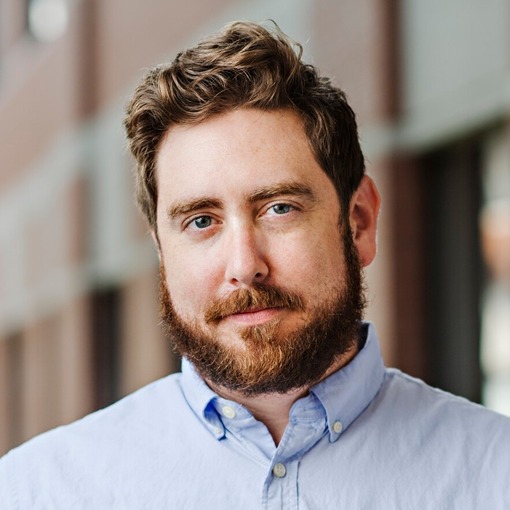
Marc Jambon
Assistant Professor in Psychology at Wilfrid Laurier University in Waterloo Ontario
Who am I?
When you were little, what did you want to be when you grew up? Share any experiences that illustrate your emerging aspirations, passion, curiosity – and changes along the way.
As a kid I didn’t give the slightest thought to what I might want to do or be as an adult. My parents have an old VHS recording of my kindergarten graduation, which includes a brief one-on-one interview with each of the students. When it was my turn, one of the first questions they asked was, “What do you want to be when you grow up?” After several seconds of looking perplexed I mumbled “Police man”. Not because I had any grand aspirations for a career in law enforcement, but because I watched movies like Lethal Weapon and Die Hard with my older siblings and that seemed like a reasonable approximation of what adults did. I was initially an Archeology major in college because of Indiana Jones and then wanted to go into Forensics because of the X-Files but it wasn’t offered, so I figured Psychology was the next best thing. You could say I watch too much TV. But you’d be wrong.
How does your work engage with ideas from Piaget (and colleagues of his era) as originally articulated or as have evolved over time? What drew you to the work that engages you most?
A friend once gifted me a sketch they made of Piaget for my birthday, which now sits on the bookshelf in my office and greets students when they walk in. I am a constructivist through and through and have found his ideas incredibly informative in my own work on the role of morality in the development of aggressive and antisocial conduct. The assertion that children actively construct their understanding of the social world through their experiences provides an alternative (and novel) framework for thinking about behaviors like aggression.
How do you characterize the understanding and processes of development What does it mean to you to be involved with development, its research, science, practice, education…?
As far as I’m concerned, everything that can be studied can be studied through a developmental lens. Everything has a past, present, and future. One point I try to drive home to my students is that developmental science is not the study of children, or adolescents, or aging; it is the study of stability and change. When you approach it from that perspective, the divisions between different disciplines start to feel less insurmountable. I feel like that’s a good thing.
Summarize and highlight one or more examples from your work and experience that you are excited to share. Why are you keen for others to learn from your efforts?
I’ve drawn on the constructivist perspective of social domain theory as a guiding framework for exploring the relations between morality and aggression in early and middle childhood. If I had to convey one key take home message it’s that aggression is an incredibly complex social behavior and it would be a mistake to assume that harmful actions stem from deficits in moral cognitions or a dearth of emotions like sympathy or guilt. If you want to understand aggression (or any other behavior for that matter), get out there and talk to people to see the world from their point of view. If you go beyond surface level judgments of whether something is “good” or “bad” you’ll be amazed at how much you can learn.
What do you see as important changes/advances in the work or field that involves you? Consider how COVID, and post-COVID, conditions affect the work and community.
The sea change we’ve seen in the aftermath of the “replicability crisis” has been incredibly positive on the whole. At the same time, it feels like many areas of developmental science are still struggling to figure out how to square the realities of doing good research with the demands of the system we find ourselves in. To offer one example that JPS members may recognize, it takes a lot of time, effort, and resources to interview young children. Even with simple experimental manipulations and/or cross-sectional data, you often need hundreds of participants to actually answer the questions you are asking. Despite the rise of online recruitment and Zoom as a data collection tool, it isn’t always appropriate and can still take years to complete a study from start to finish. Yet our timelines for developmental students, post-docs, and pre-tenured faculty members to produce and publish have, if anything, gotten shorter and more demanding. In the words of Donald Lynam, “statistical power does not care how hard it is to recruit your sample.” So we need to think long and hard as a field about expectations and how to best train and support new developmental scholars in a manner that doesn’t sacrifice the integrity of our research.
How did you become involved in the Jean Piaget Society? Answer this question in a way that might encourage others to participate in JPS.
I joined JPS my first year in graduate school. But then I received my first paycheck as a grad student and realized I had to cut some costs if I was going to eat. As an assistant professor, I was delighted to finally have the opportunity to return to the family. The more trans-disciplinary societies are great, but there’s something uniquely comforting about being part of a community with a shared intellectual tradition. I don’t have to explain or justify why I think it’s important to study children’s social knowledge!
Please tell us about a hidden talent and/or a non-academic hobby that you enjoy.
Did I mention that I love TV?
2024 | November
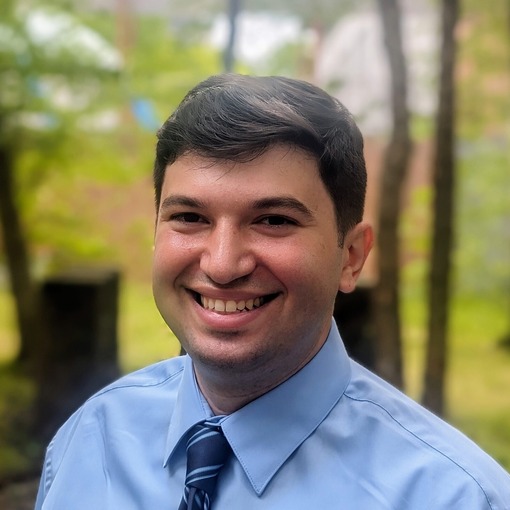
Nadxieli Toledo Bustamante
Assistant Professor of Child & Adolescent Development in the College of Education at California State University Sacramento
Who am I?
When you were little, what did you want to be when you grew up? Share any experiences that illustrate your emerging aspirations, passion, curiosity – and changes along the way.
How does your work engage with ideas from Piaget (and colleagues of his era) as originally articulated or as have evolved over time? What drew you to the work that engages you most?
How do you characterize the understanding and processes of development What does it mean to you to be involved with development, its research, science, practice, education…?
Summarize and highlight one or more examples from your work and experience that you are excited to share. Why are you keen for others to learn from your efforts?
What do you see as important changes/advances in the work or field that involves you? Consider how COVID, and post-COVID, conditions affect the work and community.
How did you become involved in the Jean Piaget Society? Answer this question in a way that might encourage others to participate in JPS.
Please tell us about a hidden talent and/or a non-academic hobby that you enjoy.
For a piece by Dr. Bustamante https://anthrosource.onlinelibrary.wiley.com/doi/abs/10.1111/aeq.12487

2024 | October
Salvatore Garofalo
Assistant Professor Secondary Science & Technology Education Program, SciTech-TEAMS Research Associate Queens College, City University of New York
Who am I?
When you were little, what did you want to be when you grew up? Share any experiences that illustrate your emerging aspirations, passion, curiosity – and changes along the way.
The first career I entertained as a child was to be an actor. I enjoyed acting in school plays and admired actors in movies. The highlight of my acting career was playing the Pirate King in the Pirates of Penzance. In many ways, this idea (which I never pursued beyond the fifth grade) provided me with confidence to speak in front of other people in a way that engages the audience. One of the courses I have been teaching for the past few years has been an introductory biology class which has an enrollment of 300 students. I thoroughly enjoy teaching and interacting with this large group of students as I walk up and down the aisles of the lecture auditorium with my iPad to let the students know I am as invested in them and the material as they are.
How does your work engage with ideas from Piaget (and colleagues of his era) as originally articulated or as have evolved over time? What drew you to the work that engages you most?
I am sure many people feel this way, but I was drawn to Piaget and his work because my early career and academics mirrored his. I went to Stony Brook University in New York for my undergraduate degree where I studied biology. I spent the last two years of my undergraduate career working in an invertebrate zoology lab where I studied mollusk predation in Long Island’s Great South Bay. I did not begin my cognitive psychology education until I began my doctoral studies at Columbia University and was particularly drawn to the field by observing my own children. As I read Piaget’s works, I felt a connection to his thought process of development and in particular the development of spatial reasoning. Since my research focuses on adolescents and young adults, I am fascinated by Piaget’s developmental research to understand what has transpired in a person’s cognitive development and how we can engage their prior experiences to learn later in life.
How do you characterize the understanding and processes of development What does it mean to you to be involved with development, its research, science, practice, education…?
I would characterize the understanding and processes of development as perhaps one of the most important concepts we can understand as a society. Perhaps I am a little biased at this point in my life as I have two young sons (3.5 years old and 1.5 years old), but I often find myself in pediatrician offices and teacher meetings wishing more people understood Piaget’s research. I try to keep my research hat off while I have the privilege of playing with my sons and watching them develop. However, my observations of the different toys and books they interact with the most and talk about days later has provided the foundational ideas for my current research which focuses on initial learning experiences and how tactile kinesthetics with the learned material impacts long-term understanding. In particular, studying how adolescents learn through hands-on manipulatives, since it was such a large component of how they learned as young children, has become the focus of my research and teaching. I am hopeful that my research can inspire change in 7-12 grade classrooms (and even university courses) to encourage a greater focus on haptics to make the abstract more concrete.
Summarize and highlight one or more examples from your work and experience that you are excited to share. Why are you keen for others to learn from your efforts?
I am most excited about new technologies and how we interact with them and how they interact with us. Artificial intelligence, augmented reality, and virtual reality are new frontiers in the technological revolution, and it is important to learn how they impact human thinking and development and how human thinking and development impact technology! While my team and I are in the early days of research with these technologies, we have spent a few years studying the cognitive impacts of drone operation over time. I was fortunate enough to present some of this research at JPS in Madrid and have an update for Toronto! It is so interesting to see how people come to new technologies with past experiences even if they have never used the technology before. For example, our drone research relies on prior experiences of videogame play since it is a tangential learning experience. We modeled our understanding of the cognitive impacts of drone operation through the theoretical framework of Piaget’s constructivism.
What do you see as important changes/advances in the work or field that involves you? Consider how COVID, and post-COVID, conditions affect the work and community.
I think an important change in the field, in light of the pandemic, is the incredible importance of making science and facts understandable to the layman. I have always tried to make my writing as accessible and engaging to as many people as possible, but often find when we talk about theories in abstract ways, we lose people’s attention. I believe concrete and engaging facts and data that are presented in easily understood and digestible ways are the best path forward not just for the field but for society. Science literacy seems to be decreasing around the globe, and it is important we make our research as clear as possible to present the facts so individuals can make informed decisions.
How did you become involved in the Jean Piaget Society? Answer this question in a way that might encourage others to participate in JPS.
My first JPS conference meeting was in 2016 in Chicago. Two of my colleagues were working on their proposal submissions at the end of 2015 and were telling me about their research and JPS. I was intrigued by both and submitted a poster which got accepted and became my first academic conference presentation! The JPS conferences have always afforded an inviting and intimate setting to share research and ideas with colleagues around the world who have similar interests. I always look forward to meetings where I can meet new people and reconnect with my JPS friends. Even as a doctoral student, I always felt welcomed and that my voice was heard during the conferences. JPS’s devotion to “the study of the construction of knowledge and development” is evident during the conference meetings and through the journal, Human Development. These resources have supported my research which is closely aligned with this ideal. My entire research career, which I like to say started with that first poster in 2016, has been entrenched in the construction of knowledge and the prior experiences people use to build new knowledge and understanding. In addition to kickstarting my research, being a JPS member has influenced my work heavily through Piaget’s ideas which are usually my foundational theoretical frameworks. I feel so fortunate to have found JPS and that JPS has accepted me and provides an opportunity for me to showcase my work and to learn from like-minded colleagues.
Please tell us about a hidden talent and/or a non-academic hobby that you enjoy.
If I didn’t devote my time and studies to research, I would probably have spent the time becoming a sommelier. I love wine (and I know many do). At the risk of sounding like I overindulge, I mean to say I love to try new wines. The majority of my honeymoon was spent in small towns in France and Italy at different wineries learning about the wine making processes, the laws that regulate the wine, and the incredible range of flavor profiles. I am by no means close to being a somm, but I like to pretend I know a thing or two about wine when I am out to dinner with my wife and close friends. I even host an annual wine and cheese party for my friends from undergraduate who, despite my best efforts and painstaking selection of a wide range of varietals, still request “just give me a red.” I am always open to sharing a glass to enjoy the wine and more importantly the company regardless of their knowledge.
Thank you for the chance to get to know me through this interview. I hope to see you at a future JPS conference and am always available to make a new acquaintance and share a glass of wine.
2024 | September
Eleanor Duckworth
Professor Emeritus, Harvard University
Who am I?
When you were little, what did you want to be when you grew up? Share any experiences that illustrate your emerging aspirations, passion, curiosity – and changes along the way.
As a child, on a piece of paper, I made 12 blocks. In each block, I put one thing I wanted to do when I grew up. One was a scientist; one a ballet dancer; one a violinist; one a housewife with lots of committees – that’s my mother. I wanted to dance. When I was 13, the Halifax dance company I was in, went on tours. We did Swan Lake on Toes! I was a Little Swan! I love ballet; I loved the dance teacher; that time of my life! A little later, I had to choose between ballet and violin. My father was not happy with ballet as a career. I chose violin. 50 years later, I went back to dancing!!
How does your work engage with ideas from Piaget (and colleagues of his era) as originally articulated or as have evolved over time? What drew you to the work that engages you most?
I happened to study with Jean Piaget on a scholarship [from Canada]. I knew a little bit of French, they sent me to Paris, it was 1957. I got fascinated by Piaget’s work, more philosophically. Epistemologically. I was there for three years. I eventually did my doctorate there, but it wasn’t yet.
I was one of the only people in North America who ever worked with Piaget. I got a job at the Elementary Science Study, a wonderful organization, to develop curriculum for elementary school children. I was the only staff who didn’t know any science. There weren’t any children on staff. So I became the child that everybody tried their ideas on. And that was a terrific education for me. They never told me anything. They just asked me what I would do with this or how I would go about that. And it was terrific. I loved it, and I loved learning that way. And it was the first time really I learned in my own way.
In developing the curriculum, when they took it into the classrooms, I went along to try to figure out what the kids were thinking about it. It was exactly what I did in Geneva as a research assistant. Talk to kids and find out what they’re thinking about something, keeping them thinking more and talking more. Then I started teaching teachers. I did exactly the same things in teaching as I did, in researching, asking questions, not saying yes or no to answers. It ended that I loved to work with teachers. And having them think about what it means to learn something. How did people learn things and what can anyone do to help you?
Summarize and highlight one or more examples from your work and experience that you are excited to share. Why are you keen for others to learn from your efforts?
Piaget and Inhelder are at the heart of all of the work I’ve done in education. My question is how do people learn things? And what can anyone do to help?
The attitude that I had as a Genevan researcher was the best attitude to have with them, asking what they thought about this and that, and never giving any clues as to what I thought about it. I loved playing that. I loved that role and getting kids finding how interested kids got in their own thoughts and then puzzles and how hard they would think, and so on. And gradually I realized that was a pedagogical approach. What I think of as teaching now is: getting people thinking about interesting and important topics. Having them work out their own ideas, come to their own commitments of what they think about it. Not by somebody else telling them what they should think about it. That came straight from Piaget and Inhelder, and it’s the heart of my work.
I started teaching at Harvard Graduate School of Education in the 1980s. Like a bridge between Piaget and education, I gave graduate students cool stuff to study. For example, I’d come into the classroom, I had one student stand here, another student stand there. I’d ask them, where on the wall, should they put a little mirror, so that person can see that person? I never tell them anything that’s right or wrong.
How did you become involved in the Jean Piaget Society? Answer this question in a way that might encourage others to participate in JPS.
The first thing is that I translated Piaget’s lecture. That was at the second JPS meeting. So, that’s how I learned about JPS. I translated Piaget for the first time around 1964. Whenever he was invited, he said they had to invite me to translate. So that’s what happened with the JPS. I remember feeling very warmly towards the women who had created this society. Lois McCumber and Jeanette Gallagher and others. I just remember they’re doing this great job creating this great association. And, knowing that they were teachers, they came from education, which is where I came from, too, by that point. That seemed important to me. My sense is that the sessions were about education and its place in education. They weren’t very focused on psychology research of the day. They were more interested in educational practice of the day and how Piaget and Inhelder could help.
JPS seemed like a home base. For some time, I think the society was paying less attention to education, and I was hoping that our work could draw interest back to education in that society. I always felt at home at Piaget Society meetings and was happy to introduce students there. I have a sense that, there’s a good home for education again.
Please tell us about a hidden talent and/or a non-academic hobby that you enjoy.
I learned about a dance class for people over 55. I didn’t want to do it then, because I thought I would be too heartbroken (after not dancing since youth). I was 58 before I had the guts to dance again. First class was fantastic! There I was dancing! So I kept dancing. I am still dancing!! I performed last weekend.

2024 | February
Andrew D. Coppens
Associate Professor, University of New Hampshire
Who am I?
When you were little, what did you want to be when you grew up? Share any experiences that illustrate your emerging aspirations, passion, curiosity – and changes along the way.
I didn’t think about future jobs and careers very much at all when I was young – the messages I encountered were something like “do well in school…” but with a vague “because” associated with that expectation. My work recently is teaching me how common it was at that time to treat school achievement as a common-sense article of faith among people with backgrounds similar to mine. In any case, I wasn’t a great student in terms of motivation and focus in those years, and I had no idea why school seemed to click for some of my peers (as well as my identical twin brother) and I couldn’t get much traction on it psychologically.
Looking back, late high school was when my interests and activities began to point in the general direction of my current work as a developmental researcher. I had met a few teachers who were involved in experiential and outdoor education – “alternative” educational approaches that first exposed me to a critical perspective on conventional middle-class ways of organizing learning. Although I’m not involved in these fields today, I’ve been working to understand the developmental implications of different cultural ways of organizing learning in childhood ever since.
How do you characterize the understanding and processes of development? What does it mean to you to be involved with development, its research, science, practice, education…?
To me, asking and addressing developmental questions involves finding connections between individual and cultural processes or, in other words, relations between the kinds of social and psychological work people do and how that work creates patterned and consequential situations for learning and development. I have very little interest in knowledge about development that is not built on thorough cultural, historical, and political contextualization.
How does your work engage with ideas from Piaget (and colleagues of his era) as originally articulated or as have evolved over time? What drew you to the work that engages you most?
One of the fundamental lessons I associate with Piaget, among others, is the importance of taking an “actor perspective” (versus an “observer perspective”) in developmental research (language I borrow from Steele, 2010). Piaget contributed immensely to this epistemological commitment in developmental science, and was systematically concerned with understanding how knowledge can be viewed as a process of personal sense-making among young children. As a cultural psychologist, I work at different timescales than those which were central to Piaget; however, he reminds me that agency is no less active in cultural and historical processes than it is in ontogenetic and microgenetic processes.
My work positions me as a cultural psychologist just as much as a developmental psychologist, and I see both as deeply compatible with Piaget’s commitments. Candidly, I think too great a proportion of research on “culture” is focused on differences between social groups leaving cultural psychological questions about origin and history – where does this psychological or developmental pattern come from? What gives rise to it? – relatively under-emphasized. For this reason, Piaget’s interests in genetics resonates quite deeply in my work.
Summarize and highlight one or more examples from your work and experience that you are excited to share. Why are you keen for others to learn from your efforts?
One line of my research is focused on the cultural values and practices that give rise to children’s collaborative initiative in everyday helping, as well as whether these differ between some communities and others. Indeed, there are striking cultural differences out there [e.g., Alcala et al., 2014; Coppens et al., 2016] but at least as interesting to me is how and why children’s prosocial development seems to diverge. In recent studies [Coppens & Rogoff, 2021; Coppens et al., 2020; Rogoff & Coppens, 2024/in press], parents’ proleptic expectations – like future-fulfilling cultural expectations – seemed very important. Parents who saw toddlers’ early attempts to get involved in household chores as an intention to help, structured children’s engagement in ways that seemed to give rise to more helping. Parents who saw toddlers’ attempts to get involved as play structured children’s day in ways that allowed for more play… and less prosocial helping.
This past-future dialectic is a central thread in my developmental research; I think it is always present and a primary way that “culture” works in relation to learning and development. A newer line of research looks at how archetypical identity stories work in relation with both educational and workforce trajectory decisions among young people from rural backgrounds [Seaman et al., 2023].
How did you become involved in the Jean Piaget Society? Answer this question in a way that might encourage others to participate in JPS.
I have found the Jean Piaget Society to be deeply inclusive. I’ve presented papers and research at JPS meetings that were never ostensibly about classical Piagetian concepts, but always felt welcome among a group of thinkers interested to see connections and relations. In this career, my work has benefitted most from conversations with people who were just far enough afield to show me a new way of thinking about or interpreting a problem, but not so far afield that my own work did not provoke them. JPS has often embodied this sweet spot.
Please tell us about a hidden talent and/or a non-academic hobby that you enjoy.
I am friends with anything involving two wheels and turns. Bicycles and motorcycles are favorites.
Older Member Highlights
2024 January | Laura Elenbaas
Assistant Professor, Purdue University
When you were little, what did you want to be when you grew up?
As a young kid, my first known career aspiration was to be a ballerina. These days the closest I come to a stage is teaching my undergraduate Introduction to Human Development class.
How do you characterize the understanding and processes of development? What does it mean to you to be involved with questions of development?
Among other things, studying the processes of development offers insights into why individuals and groups treat each other unfairly and what can be done to create a more just society from the ground up. In terms of personal meaning, my research is a way of making a positive contribution towards those goals.
How does your work engage with ideas from Piaget (and colleagues of his era) as originally articulated or as have evolved over time? What drew you to the work that engages you most?
As a moral development researcher in the social domain theory tradition, my work is directly influenced by Piaget’s constructivist perspective on the origins of morality.
Summarize and highlight one or more examples from your work and experience that you are excited to share. Why are you keen for others to learn from your efforts?
So far, I am most excited to share my research on children’s perceptions of social inequalities, including how children acknowledge, explain, evaluate, and respond to inequalities pertaining to race, social class, gender, and nationality. This work stretches current theories to consider how children think about the hierarchies of their social world and identifies the relational processes and social contexts that foster (or suppress) resistance to injustice early in development.
What do you see as important changes/advances in the work or field? Consider how COVID, and post-COVID, conditions affect the work and community.
One recent change I’ve been happy to see is greater recognition of areas of research that have always had equity as a core focus as well as new generations of developmental scientists who intentionally claim this as central to their work.
How did you become involved in the Jean Piaget Society?
I was introduced to JPS in grad school by my mentor, Melanie Killen. As a faculty member, I was encouraged to deepen my involvement by my colleague, Judi Smetana. As a society, JPS is unique in its strong theoretical focus and its genuinely international membership.
Please tell us about a hidden talent and/or a non-academic hobby that you enjoy.
If I have a hidden talent, then it’s very well hidden because I haven’t found it yet. I do enjoy being in nature and love a good weekend hike.
@drlauraelenbaas on X
2022, December | Tesha Sengupta Irving
Associate Professor, University of California Berkeley
When you were little what did you want to be when you grew up? If your trajectory changed, what contributed to that?
- What drew you to do work in developmental science?
Can you please highlight a couple of findings from your work that you are particularly proud of and why?
What do you see as important changes/advances in the field especially in light of both our COVID and post-COVID eras?
How did you become involved in the Jean Piaget Society?
Please tell us about a hidden talent and/or a non-academic hobby that you enjoy.
2022, October | Stuart Marcovitch
Professor, University of North Carolina Greensboro
When you were little what did you want to be when you grew up? If your trajectory changed, what contributed to that?
For most of my high school years, I wanted to be a medical doctor. I always got good grades in the sciences, and it seemed to be a natural direction. However, when it came time to select a major in College (McGill University), the “typical” medical fields of Biology and Chemistry did not excite me. I ended up making the tough choice between Psychology and Mathematics, with math winning out – but I did complete a minor in Cognitive Science which covered Psychology, Linguistics, Philosophy, and Computer Science. As I graduated, I realized how much more I enjoyed my Cognitive Science minor than my major.
What drew you to do work in developmental science?
Oddly, I did not take any developmental courses in college, although I was exposed to developmental theory in my Cognitive Science capstone class. When it came time to consider graduate school, I was excited by what little I knew about development (at the time, I still held the naïve view that developmental research was constrained to children) and wanted to explore it further. I expected to have to take an additional qualifying year given my lack of background, but my cognitive science mentor assured me that I would catch up quickly if I entered any program. I was fortunate enough to be accepted to University of Toronto to work with Phil Zelazo, and although I immediately took graduate level developmental classes, my first exposure to the undergraduate class was when I was the instructor 18 months later!
Now, with the benefit of hindsight, I have a clearer view of what excited me about the developmental program at Toronto and the field in general. What began as a curiosity about children and their behavior, has now blossomed into a full blown appreciation of mechanisms in context changing over time. I now find myself puzzled at my colleagues’ research presentations as they seem only to be interested in how adults are performing at one point of time, ignoring the layered information we get from understanding how we got to that stage and where we are going.
Can you please highlight a couple of findings from your work that you are particularly proud of and why?
In a pair of publications (Marcovitch, Boseovski, & Knapp, 2007; Marcovitch, Boseovski, Kanpp, & Kane, 2010), my co-authors and I demonstrated how errors in task switching can be framed as goal neglect errors, and how these errors are magnified in context where maintenance of the goal is not strictly necessary to perform the task. What I particularly liked about this project was that it was the first time (but not the last) that I was involved in translating a task used with adults into one that was appropriate for 5- and 6-year-old children – this is not uncommon in experimental developmental research, but has a host of unexpected challenges associated with it. It was also the first time in my research career (and maybe the last) that the predictions matched the actual behavior of the children.
Although the academic influences of working on a variation of the Dimensional Change Card Sort task is unsurprising given my graduate training (thanks Phil!), I drew upon a personal child experience in conceptualizing the processes involved. Our bathroom light experienced a short so that when it was turned on, the entire house lost power. My father told us repeatedly not to turn the light on. And, of course, my siblings and I would invariably turn on the light every time we entered the bathroom causing my father to utter words that are not said on network television. I finally came up with the idea (I was a promising 12-year-old problem solver) of putting a piece of tape on the light switch – that tactile sensation served as a cue to reflect upon the new goal of not turning the light on.
What do you see as important changes/advances in the field especially in light of both our COVID and post-COVID eras?
For many developmental scientists, COVID slowed down or stopped research activity, forced unwanted changes to ongoing and upcoming work, and compromised data collection. Others found new creative ways to conduct research studies and seemed to benefit from the larger reach remote testing can offer. So, the big changes to the field are dealing with over two years of inactivity or compromised research (and that direct effect on the careers of graduate students and emerging scholars), while at the same time opening up the possibility of larger research projects on grander scales where geography no longer serves as a major constraint. Both of these issues have to be thought about seriously, and it is organizations such as JPS that can suggest guidance on how to best navigate our way through this time and into the future.
I will point out what I have been saying for a few decades now – techniques may change with time, focal interests wax and wane, technology advances some of us while leaving others behind, but the one constant has been the importance of careful, experimental research. It is still the only way to ask direct questions about causality (and no, longitudinal designs do not completely resolve this issue). Experimental child psychology may look different over time, but it will always have a place in developmental science.
How did you become involved in the Jean Piaget Society?
My graduate mentor encouraged my involvement in the society, and I had the opportunity to attend my first JPS meeting in Chicago in 1998. My future spouse (and former JPS board member Janet Boseovski) and I stayed with a friend (thanks Jessica!!!) and had the conference fee waived in return for volunteer hours. It was a terrific event – I had the opportunity to meet senior scholars in the field, to attend talks in related areas, and to watch the Bulls win a playoff game in a bar with U Chicago grad students and faculty.
Since then, I attended as many meetings as I could, preferring the intimacy of JPS to the meetings of more generalized societies. JPS members have a way of making you feel valued as a researcher without sacrificing scientific rigor, and this is precisely the way most science is conducted (yes, the Big Bang Theory is just a TV show). It is an organization simultaneously dedicated to the investment of emerging scholars while still honoring the career wisdom of veterans. You can email any JPS member and receive a courteous, enthusiastic response in return.
As an experimental cognitive developmentalist, I have been trained that research ideas are generated from strong theoretical perspectives. Piaget’s theoretical perspective and large corpus of work remains relevant to all research today, even when researchers are seemingly disproving some of his ideas (and yes, disproving ideas is the prominent tenet in science which even strengthens Piaget’s ongoing influence) or claiming that our modern techniques were beyond his reach. To study any element of knowledge and development means that you have been influenced by Piaget, even if that influence is after several degrees of separation. Ironically, as my colleagues are trying to get credit for unique, ingenious ideas, I think that they would be better served tracing the development of these ideas from its theoretical roots to their current state. Similar to people, the development of ideas gives us a stronger understanding of the rich contextualization that arises from our contemporary studies.
The influence has been strong on my own work – I still take a theory driven approach to my research, and every student who works with me or who has taken a class with me, knows that I’m not simply satisfied with “cool ideas” unless they are theoretically bound. And I am equally excited about research that challenges theories (even my own) as I am about research that is consistent with theories.
Please tell us about a hidden talent and/or a non-academic hobby that you enjoy.
In my younger days, I would have impressed many by the sheer amount of food that I was able to consume (JPS 2019 in Portland – I promise I had more donuts in the 15 minute break than anyone). But now the appreciation of quality food has become a passion. And a slice of Brooklyn pizza can excite me as much as a 5 course Michelin star meal.
Thanks to the food passion, I have also developed a hobby of exercise which has me running or strength training every day. For those of you who do not exercise at meetings, may I suggest you reconsider. It is invigorating to attend those early morning sessions having just experienced a workout, you will fell less guilty about eating the delicious snacks, you will look forward to the special dinners, and you can meet interesting people with similar hobbies. JPS running club, perhaps?
2022, September | Jessica McKenzie
Associate Professor, California State University, Fresno
When you were little what did you want to be when you grew up? If your trajectory changed, what contributed to that?
One of my earliest memories involves lining up all of my stuffed animals for weekday lessons. Apparently the very young Dr. McKenzie was quite the taskmaster! Though my interest in teaching has been long-lasting, my research interests developed somewhat more recently. My experience studying abroad in Italy as an undergraduate ignited my curiosity about how culture structures the life course. Living in Italy, and then in Thailand post-graduation, sparked some very legitimate questions about how globalization affects youth development and family relationships.
What drew you to do work in developmental science?
When I returned from 14 months in Thailand and applied to graduate programs, I was convinced that I was a social psychologist-in-the-making. I trained in a social psychology research lab, spoke with potential social psychology mentors across the U.S., and applied to social psychology PhD programs. One afternoon, I received an email from Dr. Lene Jensen (who would later become my graduate mentor at Clark University), which was along the lines of, “I noticed that you applied to our social psychology PhD program, but you sound like more of a developmentalist…”
Lene was right. I am a developmental scientist because I study how the self comes into being, and how that coming into being is shaped by culture. I am especially interested in how cultural change (via globalization, and immigration) influences young people’s beliefs, behaviors, and relationships.
Can you please highlight a couple of findings from your work that you are particularly proud of and why?
I am especially proud of my work that contributes to the theoretical base of the psychology of globalization. For example, alongside students in my Human Development & Culture Research Lab, I have written about globalization-based cultural brokerage. This work highlights how adolescents in northern Thailand broker their parents’ participation into media-driven culture, in turn shifting power dynamics in a nation that has traditionally been characterized by age-based hierarchy.
In another recent study, I trace how local and global values are negotiated among remotely bicultural youth in northern Thailand. This piece, which I shared at a recent Jean Piaget Society meeting, unveils psychological strategies that adolescents employ to integrate local and global values (e.g., by reshaping local values to encompass global values, and by dividing up the life course such that global and local values take turns directing one’s life). This study also highlights integration-related challenges, whereby some adolescents experience local and global values as antithetical, and are therefore forced to endorse one value system over the other.
Both studies speak to how young people in the rapidly globalizing Thai context internalize global values, and how local values are at once transformed and maintained in the face of sociocultural change.
What do you see as important changes/advances in the field especially in light of both our COVID and post-COVID eras?
I’d like to offer an exclusively optimistic answer here, but I see both challenges and opportunities. I believe that cultural developmental research is fundamentally relational. In my experience, people invite you to understand their lived realities if you offer your presence—psychological and physical.
In this COVID/post-COVID era, universities are understandably wary of sending faculty abroad to conduct research. Administrators at some U.S. universities, for instance, have curtailed their support for research-related travel, with the justification that COVID has taught us that much of our work can be conducted virtually. I worry that this mantra may stymie fieldwork that is central to obtaining high-quality cultural developmental data. How do we establish relationship and presence when we are not present? In the future, we will need to insist upon physical presence as the backbone of our work.
On the other hand, COVID has inspired creative research methodologies (e.g., digital ethnography, social media analysis, Google Trends analysis) that will most certainly broaden the scope of developmental science, and push us to reconsider the meaning of “data” in years to come.
How did you become involved in the Jean Piaget Society?
I was introduced to JPS by Drs. Maricela Correa-Chávez and Allison DiBianca Fasoli (thanks, you two!) several years ago. Both suggested that I would appreciate JPS because its members tended to think about developmental science rather deeply, and because JPS meetings are far more intimate than larger developmental conferences.
When I attended my first JPS meeting in Portland, both promises were fulfilled. During that meeting, I reconnected with colleagues I hadn’t seen in years and forged new professional relationships. I was especially grateful to JPS for the dynamic set of invited speakers, the careful integration of academics at various points in their careers, and the many opportunities to socialize in hallways before and after meetings. One of the things I have missed most during the height of COVID was the opportunity for naturally unfolding conference conversations over coffee and croissants (which JPS also does quite well).
Please tell us about a hidden talent and/or a non-academic hobby that you enjoy.
Though I’m fortunate to have had a number of powerful teachers over the years, my two most influential non-academic teachers are just as important: nature and my two-year-old son. When I’m not working, I’m generally “at school” (that is, spending time outside, or with my son – and ideally, both). I have always been most fulfilled when completely unplugged during multi-day backpacking and camping trips. Pre-baby and pre-COVID, these trips spanned Asia, Latin America, Europe, and North America. More recently, I have concentrated on exploring locally alongside my son and husband, and have fallen in love with the natural beauty—so many memorable teachers—of California.
