

Season 2: Positioning Developmental Psychology
Season Two of How Ideas Travel (HIT2) is devoted to Positioning Developmental Psychology. HIT2 highlights local values of active human development researchers working in different regions of the world, from different positions within those regions. Our goal is to convene transnational conversations that broaden the meaning of human development from perspectives in the global south. This decolonial shift considers urgent concerns and priorities of scholars in South America, Africa, and East Asia.


Developer: Colette Daiute | Producer: Colette Daiute | Co-producer: Alicia Barreiro | Occasional Interviewer: Colette Daiute and Alicia Barreiro | Editor: Bridget Woods |Music: Jack J. Wright | Art: Gooloc/Jamie-Lee Barden | Contact: howideastravel@gmail.com
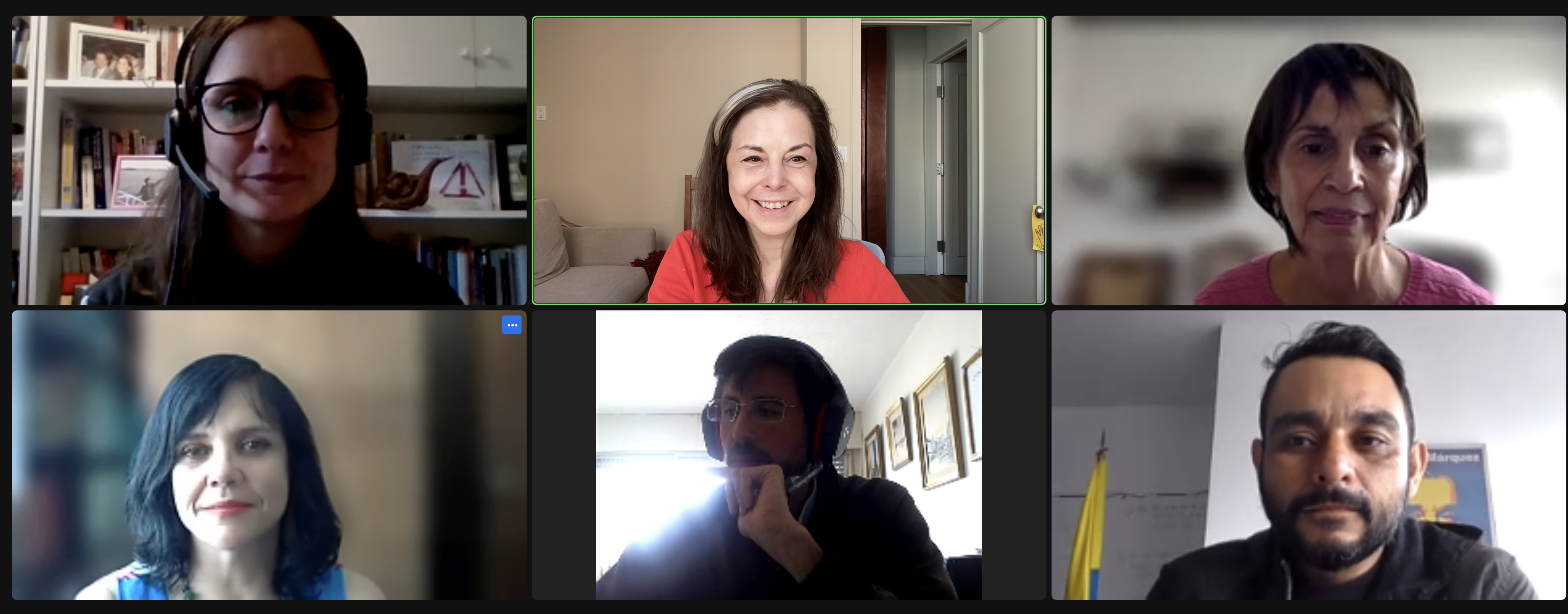
HIT2 Episode 1 [Left]
Alicia Barreiro (Argentina), Maria Loreto Martinez (Chile), Andres Molano (Colombia), Susana Frisancho (Peru), and Alejandro Vasquez (Uruguay), and Colette Daiute
HIT2 Episode 2 [Right]
Alicia Barreiro (Argentina), Fabienne Anoua, Tamara Chansa-Kabali, Ejuu Godfrey, Kofi Marfo, and Colette Daiute
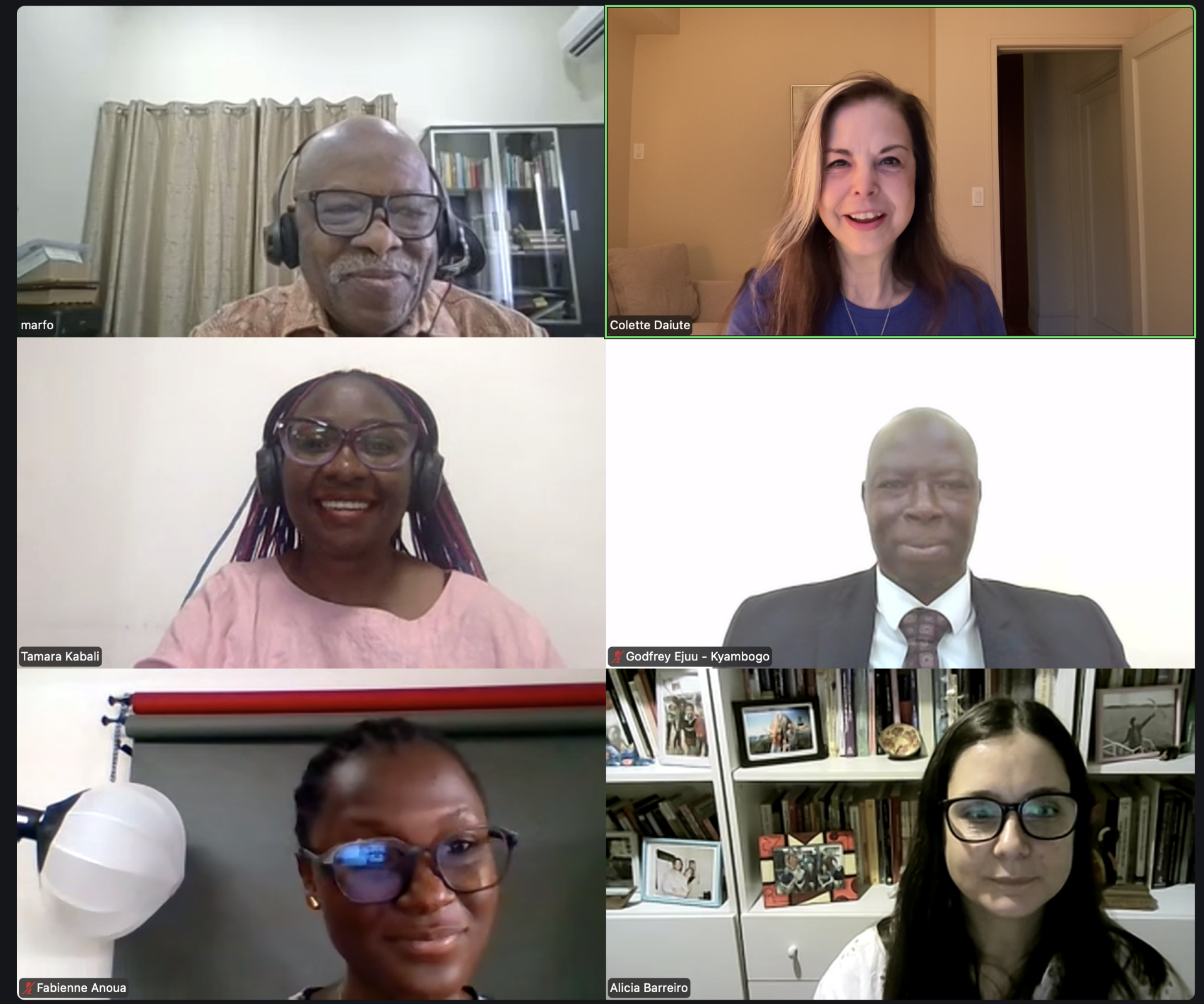
Episode 2: Positioning Developmental Psychology in Africa
 |
Dr. Fabienne Anoua obtained her PhD in the cultural anthropology education from Félix Houphouët-Boigny University in Abidjan, Côte d’Ivoire. She was the recipient of an ISSBD-Jacobs Foundation Doctoral Fellowship, is the author of several scientific articles, and has presented at conferences in Africa and Europe.
Her research focuses on early childhood in West Africa, with an emphasis on school readiness and socio-emotional development. Her findings have important implications for the current focus of initiatives to improve African children’s academic skills. They raise questions about the effectiveness of the push for countries that are struggling to fund quality primary schools to implement universal preschool education; show that gains from increasing teacher training may be limited because many teachers have knowledge about effective pedagogies but fail to apply this due to structural constraints; and question the alignment between imported conceptual models of both good parenting and children’s socio-emotional skills and the priorities of parents and teachers in West Africa. |
 |
Tamara Chansa-Kabali is an associate professor of developmental psychology at the University of Zambia. Her work advances culturally grounded approaches to child development particularly assessments, nurturing care, parenting practices, disability inclusion, and community-based early childhood systems. She works closely with local communities, schools, and international partners to strengthen culturally grounded approaches to child development. Her research positions developmental psychology within African realities, highlighting the importance of local knowledge, family systems, and community-based support for children’s learning and wellbeing. |
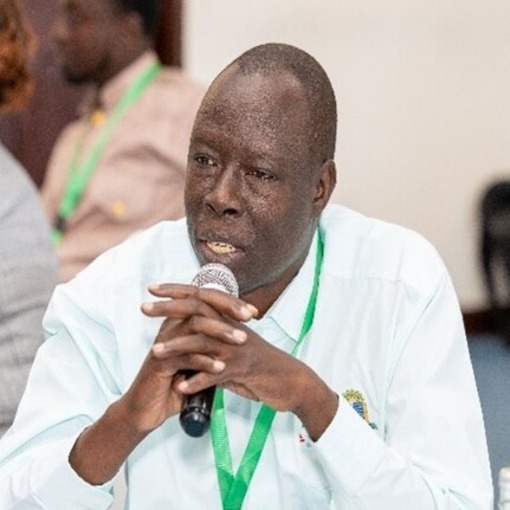 |
Ejuu Godfrey is an Education Psychologist with specialized training in Early Childhood Education (ECE). He is a professor at Kyambogo University specializing in Early Childhood Education and research in cultural indigenous knowledge for development. He has participated in ECE policy development, ECE community mobilization and advocacy. He participates in consultancy work for national, international agencies and government departments in the areas of research in ECD, policy developments, and guidelines. |
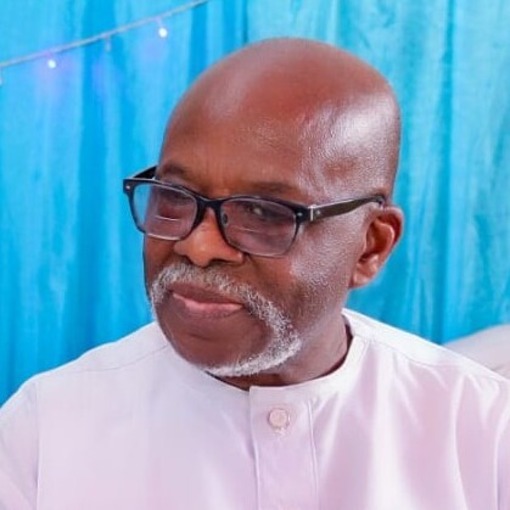 |
Kofi Marfo spent his 42-year career in six universities on three continents. He holds Emeritus Professorships at the University of South Florida (USA) and Aga Khan University (East Africa/South-Central Asia), where he was the Founding Director of the Institute for Human Development. A graduate of Ghana’s University of Cape Coast (where his university teaching career began at age 25), Kofi earned his doctorate at the University of Alberta (Canada), winning the 1985 Dunlop Award for Best Educational Psychology Doctoral Dissertation in Canada. His scholarly interests include parent-child interaction, developmental disabilities, childhood interventions, advancing globally inclusive knowledge bases, and philosophical issues in behavioral science and education research. He taught graduate courses on Cognition and Instruction and the Nature of Inquiry. He has been a residential scholar at Stanford University’s Center for Advanced Study in the Behavioral Sciences and is a Fellow of the International Society for the Study of Behavioral Development. |
Many thanks to Robert Serpell, Professor Emeritus, University of Zambia, for his generous assistance designing this episode!
Additional Promotional Episodes:
Episode 1: Central Challenges in Developmental Psychology in South America
|
Alicia Barreiro (Argentina) is a PhD in Educational Sciences and Postdoctoral Studies in Social Sciences, Magister in Educational Psychology. She is a Professor of Genetic Psychology and Epistemology at the University of Buenos Aires, and an endowed researcher at the National Scientific and Technological Research Council (CONICET-Argentine) at the Latina American Faculty of Social Sciences. Her research interests are focused on the construction of social knowledge and moral development of children, adolescents and adults, combining social and developmental psychology approaches. |
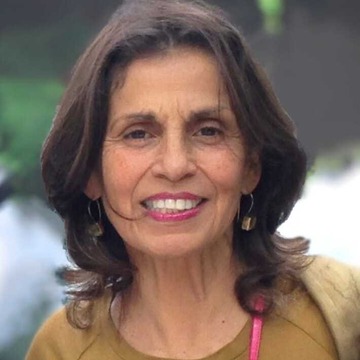 |
Maria Loreto Martinez (Chile) is a full professor of Psychology at the Pontificia Universidad Católica de Chile, and director of Penta UC, an educational program to promote the manifestation of talents in advanced students. She graduated as a a professional psychologist at the Pontificia Universidad Católica de Chile, and obtained her M. A. and Ph.D. in Psychology from the University of Maryland, U.S. Her training includes developmental, clinical, social and community psychology. Her research interests focus on children and adolescents ́social and emotional development in particular, issues of identity, autonomy and civic development in adolescents. Her research has been funded by the National Fund for Scientific and Technological Development (FONDECYT). She has published work on neighborhood effects in young children. |
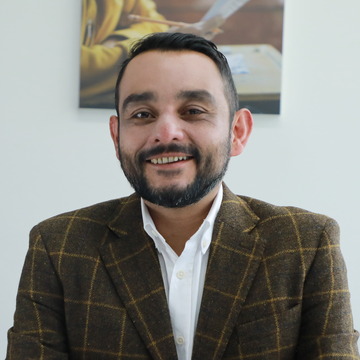 |
Andres Molano (Colombia) is the executive director of the Colombian National Institute of Educational Assessment (ICFES). Prior to this position he was an associated professor of human development and education at Universidad de los Andes (Colombia) and a senior research scientist affiliated to the Global Ties for Children center at New York University. His basic developmental work focuses on the time-variant effects of peer social networks on learning and social and emotional development. |
 |
Susana Frisancho (Peru)is a Professor at the Pontificia Universidad Católica del Perú, Perú. Dr. Frisancho focuses on cultural and cognitive development among indigenous peoples, among other related topics. She is also the Principal Professor and Coordinator of the Research Group on Cognition, Learning and Development. |
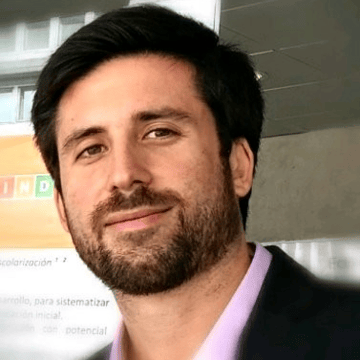 |
Alejandro Vasquez (Uruguay) is a Full Professor. Instituto de Fundamentos y Métodos en Psicología. Facultad de Psicología, Universidad de la República; Co-Director, Interdisciplinary Center for Cognition in Learning and Teaching (CICEA); Member of the National System of Researchers, Uruguay; Member of the Program for the Development of Basic Sciences, Uruguay. Professor Vasquez’s research is organized in two main branches: (a) large-scale assessment of psychological development, especially in early childhood and school readiness, and (b) temporal future orientation, both in childhood and in adulthood. From a methodological standpoint, my interests are replicability in psychology, psychometrics, profile analytics, and longitudinal models applied to developmental sciences. We created assessments for the educational system widely used in Uruguay and contributed with analytics of governmental data on early childhood services. |
