

The 55th annual meeting of the Jean Piaget Society will be held in Ottawa, Ontario, Canada
May 28th – May 30th, 2026
“Using Civic Science to Understand and Promote Healthy Human Development”
Submissions are now closed and submission status information has been emailed.
Conference Theme
Civic science is an approach to scientific inquiry that highlights scientists’ responsibility as citizens:
- to use science to assess and respond to problems faced by fellow citizens;
- to draw on the lived experience of citizens; and
- to engage citizens throughout the scientific process from design to dissemination.
Although scientists employ a method (i.e., the scientific method) well designed to yield valid logical and generalizable inferences based on reliable empirical evidence, the application of this method always occurs within a context of values and assumptions. Civic science recognizes this context dependency, is responsive to citizens’ perceived needs, supports citizens’ autonomy and self-determination, and engages citizens in collective scientific collaboration; it is an inherently educational and democratic approach to science (Abbott et al., 2014; Árnason, 2012; Boyte, 2015). Indeed, civic science education is essential for fostering civic engagement (Levy et al., 2021; Ross & Fried, 2023), and as a shared practice of systematic scientific inquiry into social problems, civic science could serve as a central feature in a robust, evidence-based democracy (Dewey, 1910; 1916, Democracy and Education).
Science itself is a democratic enterprise that invites scientists to better understand the world by participating collectively in knowledge creation. Including non-scientists citizen’s perspectives and voices in scientific inquiry, while maintaining scientific rigor, has the potential to improve the questions being asked and the implementation of results as well as to encourage popular appreciation of scientific evidence and accelerate scientific innovation (e.g., Spencer, 2015), particularly for the public good (Garlick & Levine, 2016; Galinsky et al., 2017). For example, whereas traditional intervention research typically aims to conduct independent evaluations of the efficacy of fully developed programs using a randomized controlled design, civic science aims to generate practical, locally relevant and sometimes new solutions to people’s perceived needs through collaboration and the use of participatory methods. Importantly, it proceeds through an iterative, fast-cycle research and development (R&D) process focused on creating scalable and sustainable solutions to practical problems (e.g., Shonkoff & Fisher, 2013). In particular, civic science has considerable potential to advance inquiry into and intervention regarding complex (so-called “wicked”) problems that are systemic and multidimensional—issues such as socioeconomic status (SES)-related and other differences in academic achievement and mental health (e.g., Reardon & Portilla, 2016).
Conference Focus
The conference theme is designed to address how civic science can contribute to a more comprehensive understanding of human development, based on the engagement of more representative samples of the global population; the first-person experience of citizens; and a pragmatic usage of science to promote healthy development in a sensitive and sustainable way (e.g., Galinsky et al., 2017; Spencer, 2015). In civic science, the participants in studies or the recipients of training are involved from the beginning, shaping the questions asked; co-creating and evaluating the research design, the process of inquiry, and materials; bringing insight to the results or materials created; and serving as a natural distribution system for sharing the work and involving others.
Organized by Phil Zelazo, John Spencer, and Ellen Galinsky

Phil Zelazo
University of Minnesota

John Spencer
University of East Anglia
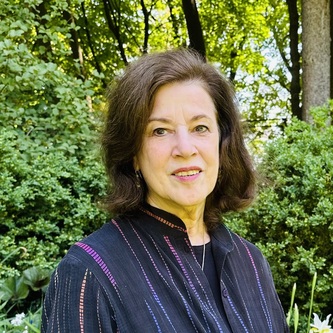
Ellen Galinksy
Families and Work Institute
